

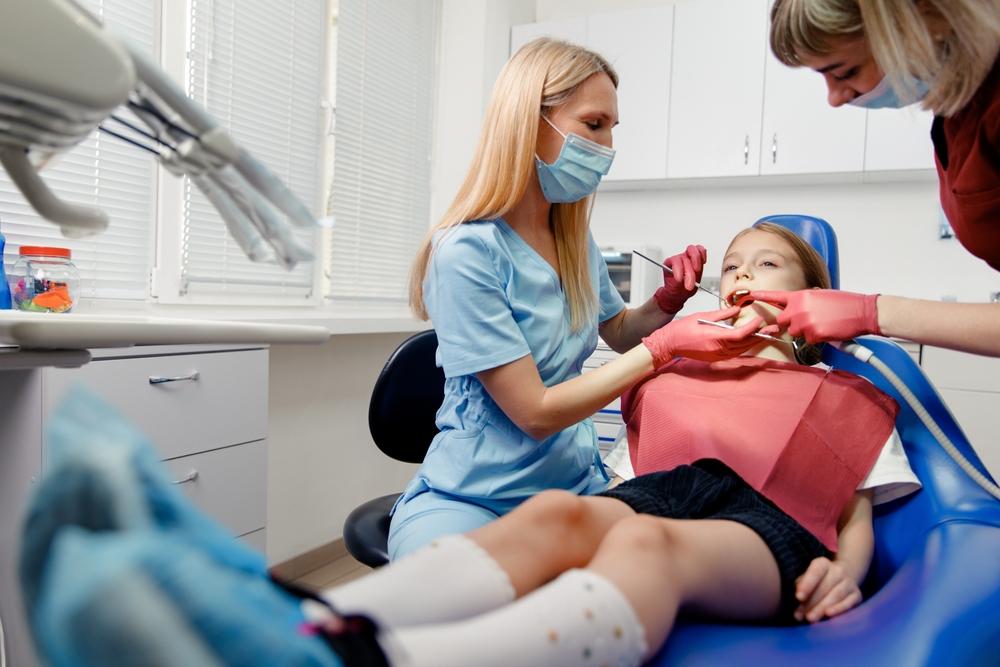
Early orthodontic treatment means starting to fix your child’s teeth before they’re a teenager. It’s when your child is still young, and their teeth are still growing. A dentist in Red Deer can help you see if your child might need this kind of treatment. Starting early can make your child’s smile better and give them more confidence when they grow up. The best part is that fixing teeth problems early is often easier than waiting.
Most parents think about braces only when their kids are teenagers. But doctors now know that catching problems early can stop bigger problems from happening later. If your child shows certain signs, getting help in elementary school or middle school can save time, money, and headaches.
Signs That Your Child Might Need Help
Teeth That Are Crowded or Twisted
Look at your child’s smile. Do some teeth overlap? Are they pointing in different directions? Crowded teeth are very common in kids. When teeth are crowded, they’re harder to brush and floss. This leads to cavities and sick gums.
Crowding occurs when there is not enough space on the upper or lower jaw for adult teeth. When baby teeth are falling out, if you see crowding, contact your dentist. Receiving help at an early phase can direct how their jaw develops and help shape room for permanent teeth.
Bite Problems
A bite is how your child’s top and bottom teeth fit together when they close their mouth. Some kids have bites that don’t work right. An overbite means the top teeth stick out too far over the bottom teeth. An underbite means the bottom teeth stick out more than the top teeth.
A crossbite happens when some top teeth bite inside the bottom teeth instead of outside. These problems can look odd and make it hard for your child to chew food. If you notice your child’s bite looks different, mention it to your dentist near you. They can tell you if treatment would help.
Mouth Breathing
Watch your child during homework or playtime. Are they breathing through their mouth all the time instead of their nose? Kids who mouth-breathe a lot often have teeth or jaw problems.
Mouth breathing is a problem because it dries out the mouth, which causes more cavities. It can also change how your child’s face grows. If your child always has their mouth open, getting them checked is important.
Front Teeth That Stick Out Too Far
Some kids have top front teeth that stick out a lot. This makes their smile look different and puts those teeth in danger of getting knocked out during sports or play. If your child’s front teeth stick out, early help can move them to a better position.
Trouble Speaking or Chewing
Listen to how your child talks. Do they have a lisp where their ‘s’ sounds funny? Do they have trouble chewing food? Sometimes teeth or bite problems cause these issues. Fixing the teeth problem often fixes the speaking problem too.
Jaw Sounds or Pain
Does your child say their jaw hurts? Do they hear clicking or popping when they chew? These are signs that something isn’t right with their jaw. Your dentist can check this and help.
When Should You Get Your Child Checked?
Dentists say kids should have their first teeth check-up around age 7. This doesn’t mean your child will get braces right away. It just means looking to see if there are any problems. By age 7, enough adult teeth have come in that dentists can spot problems.
Don’t wait for your child to tell you something is wrong. Kids don’t always notice their teeth or jaw problems. It’s up to you as a parent to watch and get them checked. A quick visit to your dentist can answer all your questions.
Start Your Child’s Smile Journey Today
Heritage Family Dental knows that every child is special and needs care that fits them perfectly. Our kind team can check your child’s teeth and jaw and tell you the best way to help. We work with families to make early orthodontic treatment in Red Deer easy and affordable. Call us today to schedule your child’s check-up and give them the gift of a beautiful, healthy smile they’ll have for life.
Questions Parents Ask About Early Treatment
Q: How old can a child begin orthodontic treatment?
A: Children can start as early as age 6 or 7 if the dentist sees problems.
Q: If I have early treatment, will that mean I will have braces for longer?
A: Not necessarily; a long course of treatment isn’t always the best course. In fact, most children treated early will need less overall treatment than those whose teeth are treated when they are older.
Q: What if I’m not sure my child needs treatment?
A: A simple check-up can answer your questions and help you feel confident about your choice.
Q: Is early treatment more expensive than waiting?
A: Often it costs less because fixing problems early stops bigger problems from happening later.